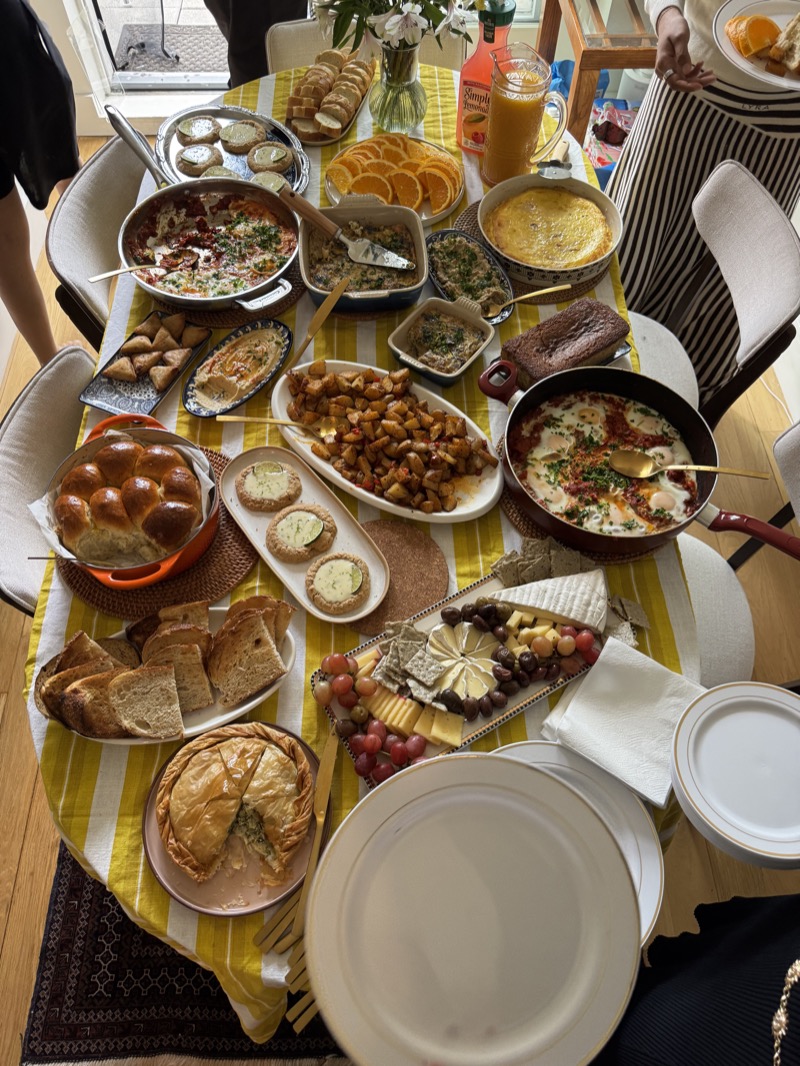
This year I’ve been reflecting a lot on what it means to be a good friend. Is it a specific behavior or trait? How they show up? The things they say?
What constitutes a “strong” friendship? Time spent together (e.g. growing up together)? The experiences that brought you closer? Or consistently showing up no matter where you are in your life? I don’t think there’s one answer. People have different upbringings and they define what it means to be a friend based on their lived experiences.
One thing that has come up recently that I found to be an important quality in a friend (or anyone for that matter) is encapsulated perfectly in the Persian originating word Mehmandari.
The word can be broken into two parts:
- Mehman -> Persian for “guest”
- -dari -> Persian suffix meaning the “keeping” or “holding” of
So it quite literally means something like “guest-keeping” or “the practice of guest holding”.
Chittagongions (the district of Bangladesh where my family is from) have a tradition called “Mezban”, which is a large communal feast and part of the larger cultural emphasis on generous, almost performative hosting: elaborate food, insistence on guests eating more than they want, and refusal to let a guest leave empty-handed.
Mehmandari is a word, among many, that was absorbed over centuries of Muslim rule, Sufi presence, and trade contact in Bengal, especially from the Sultanate and Mughal periods. Mehmandari was absolutely core to my upbringing and something I would watch my parents practice religiously. It was part of our identity and while it definitely can get performative, it leaves the guests and hosts feeling a stronger bond and kinship. I’ve seen it practiced with family and even with strangers. From the electrician who tirelessly worked to fix our AC to the Uber driver who held on to my phone and drove back from the city to return it, we would not let them leave empty handed. The more I sit with it, it seems like a nice way of thinking about how to love someone well, friend or otherwise.
So if Mehmandari is a blueprint for making someone feel loved, guest or friend, what does that actually look like in practice? Obviously there’s the hospitality elements, but I think it’s more about amplifying selflessness. To think about the well being of others before you cater to yourself. To feel the joy of the guest and continue to amplify their joy. To keep an eye out on who may need something, but is too shy to ask for it. To not ask “if” they want something, but to give it anyway. Maybe they refuse or maybe you give them what they wanted all along. It’s about finding the shy person in the corner and striking a conversation with them so they feel seen. It’s about listening to what’s new in their lives and following up with a question or two. It’s about going out of your way to help even if it means being inconvenienced. Part of the spirit of Mehmandari is to see the presence of the guest as a “gift sent from god”.
I’ve seen elements of this spirit in a few friends this past year, which I truly appreciated.